
Asthma
At Rudra Ayurvedic Clinic, we see asthma as more than just a breathing issue, It’s an internal imbalance
In Ayurveda, it’s known as Tamaka Shwasa, caused by the disturbance of Vata and Kapha doshas, which disrupts airflow and leads to symptoms like wheezing, breathlessness, and coughing.
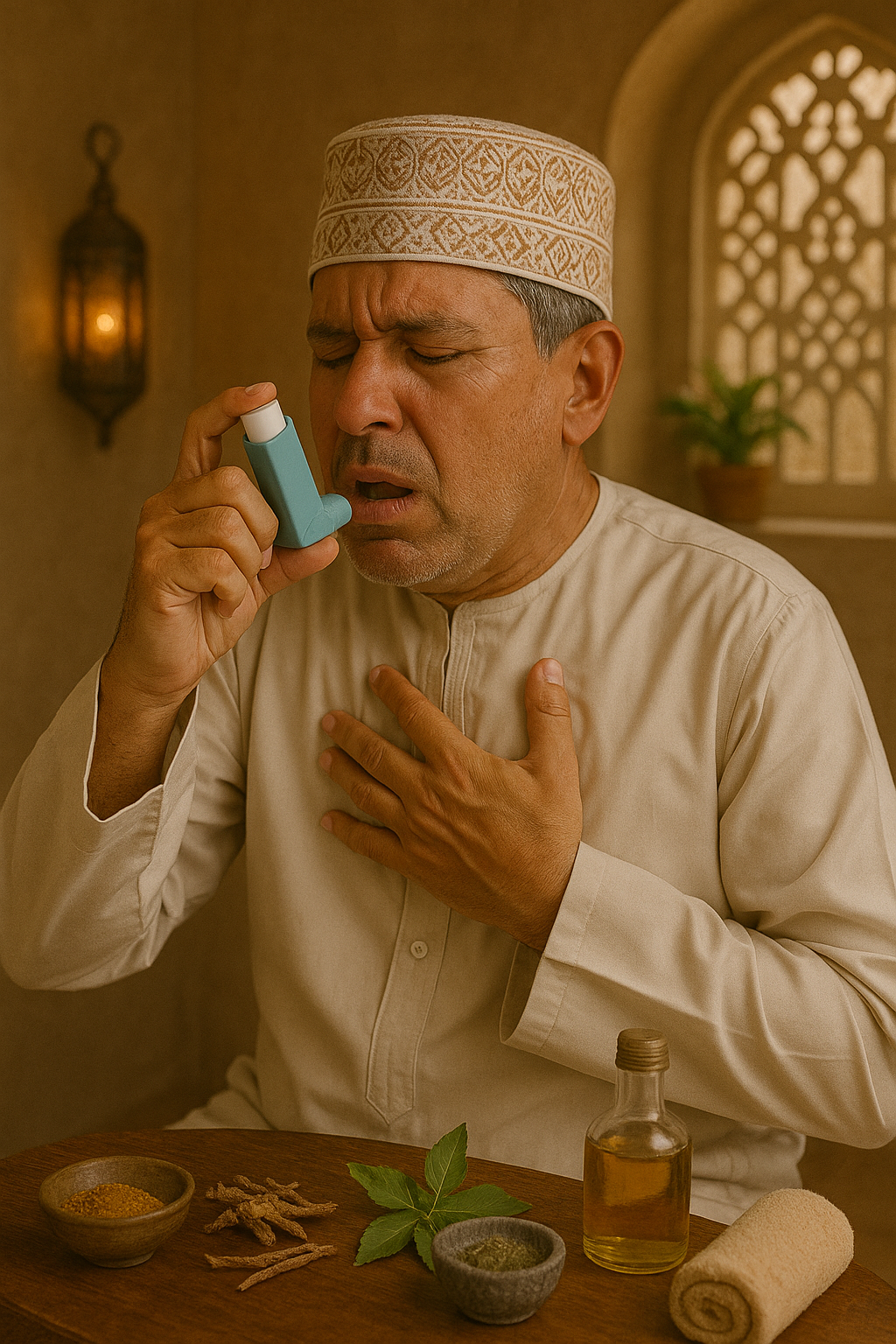
Recognise Asthma Early
By aligning modern diagnostics with Ayurvedic principles, we can catch and manage asthma in its early stages for long-term relief.
Understanding the connection between symptoms and dosha imbalances helps tailor more effective, personalised care.
Physical Symptoms (As per modern understanding):
- Wheezing and difficulty breathing
- Tightness in the chest
- Shortness of breath (especially at night)
- Coughing with mucus
- Anxiety or panic with breathlessness
Ayurvedic Observations (Rooted in dosha imbalance):
- Kapha obstructing airways, Vata unable to flow freely
- Kapha accumulation causing heaviness and stagnation
- Aggravated Vata disturbing Prana Vayu (life force)
- Kapha dominance, often mixed with Ama (toxins)
- Vata imbalance in the nervous system
What does the research say?

Herbal Decoction
Herbs such as Vasa (Adhatoda vasica), Yashtimadhu (Licorice), and Pippali (Long Pepper) are traditionally used to reduce inflammation, loosen mucus, and soothe irritated airways.
Vasa has proven bronchodilator and mucolytic properties.
Sitopaladi and Talisadi Churna are clinically effective in reducing cough and breathlessness.

Nasal Therapy
Medicated oil drops (like Anu Taila) are administered through the nostrils to help clear blocked nasal passages and reduce frequency of breathlessness
This therapy also nourishes the nasal mucosa and supports better oxygen intake, making breathing easier during flare-ups..
Panchakarma Benefits
Therapies like Vamana (therapeutic emesis) and Dhumapana (medicated smoke inhalation) are used to eliminate excess Kapha from the body and enhance lung function.
Chyawanprash, a Rasayana formulation, supports lung health and strengthens immunity in chronic respiratory cases.
 Rudra Ayurvedic Clinic